

1. Introduction: Why Powder Metallurgy Is Reshaping Modern Manufacturing
Powder metallurgy is no longer just an alternative manufacturing method—it has become a strategic solution for producing high-efficiency, cost-effective components at scale. As industries demand lighter, more complex, and more sustainable parts, powder metallurgy technology is gaining attention for its ability to create near-net-shape components with minimal waste.
Unlike traditional machining, which removes material, metal powder metallurgy builds parts by compacting and sintering powders. This fundamental difference allows manufacturers to rethink how components are designed and produced. However, not all parts are suitable for this process. The real challenge lies in identifying which powder metallurgy parts can maximize its advantages.
2. Understanding Powder Metallurgy from a Design Perspective
To understand what makes a part suitable for powder metallurgy, we must first shift our thinking from manufacturing to design logic. Powder metallurgy technology is fundamentally about shaping materials efficiently rather than removing them.
The process typically involves three steps: powder preparation, compaction in a mold, and sintering at high temperatures. This allows powder metallurgy manufacturers to produce highly consistent parts with excellent repeatability.
The key advantages include:
● Near-net-shape manufacturing with minimal machining
● High material utilization (low waste)
● Excellent dimensional consistency in mass production
However, the real power of powder metallurgy parts lies in designing components specifically for the process. Features such as internal structures, controlled porosity, and multi-functional geometries can be integrated directly during forming.
This means the question is no longer “Can this part be made?” but rather “Can this part be optimized for powder metallurgy?”
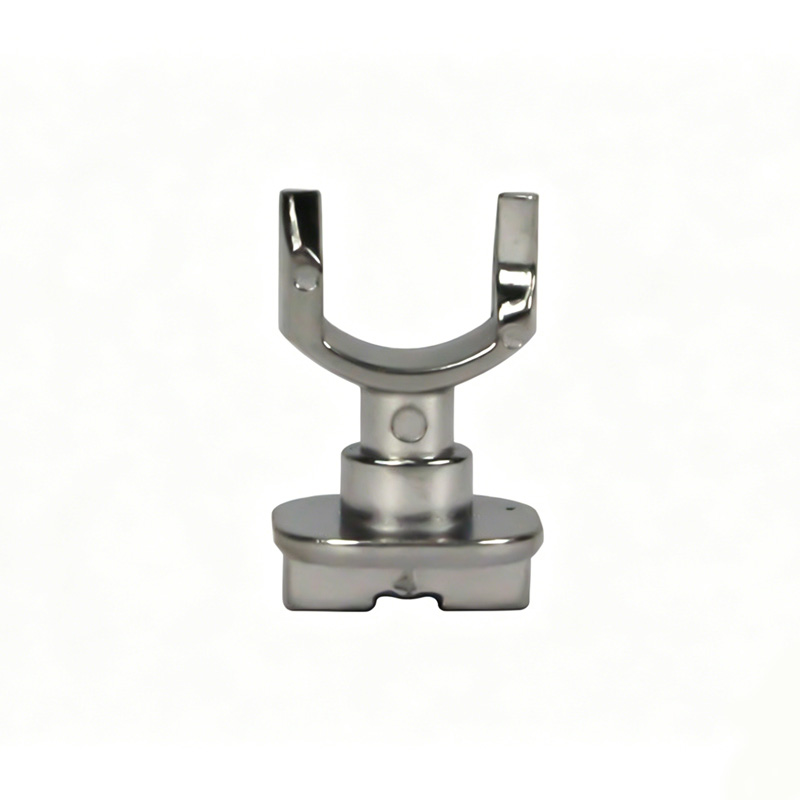
3. The Hidden Logic: Not Just What Parts, But Why They Fit
Instead of simply listing typical powder metallurgy parts, it is more valuable to understand the underlying logic that determines suitability. The best candidates are not defined by category, but by how well their design aligns with the process.
There are four key factors. First is geometric complexity—parts with multiple features such as holes, steps, splines, or grooves benefit greatly because powder metallurgy can form them in one step. Second is production volume. High tooling costs are offset only when producing thousands or millions of units.
Third is tolerance level. Powder metallurgy technology is ideal for medium precision (typically IT7–IT11), which suits most assembly needs. Finally, mechanical performance matters. Parts under moderate loads perform well, while extreme impact or high-stress components may require alternative methods.
Understanding these principles allows engineers to evaluate powder metallurgy products strategically rather than relying on trial and error.
4. Ideal Powder Metallurgy Parts (Reframed by Functionality)
Rather than grouping parts by industry, it is more insightful to classify powder metallurgy products based on their functional roles.
Motion and transmission components, such as gears and sprockets, benefit from consistent tooth geometry and wear resistance. Self-lubricating parts, like bearings and bushings, utilize controlled porosity to store lubricants, reducing maintenance.
Complex structural components are another ideal category. Parts with multiple integrated features can eliminate secondary machining, which is costly in CNC processes. Meanwhile, electromagnetic components, including magnetic cores, benefit from material uniformity and tailored properties.
Lastly, small hardware components used in appliances and tools are perfect examples of high-volume metal powder metallurgy applications where cost efficiency is critical.
5. Ideal Application Scenarios for Powder Metallurgy Products
The success of powder metallurgy parts depends heavily on the application scenario. The most suitable cases share several common characteristics.
First, high production volume is essential. Annual quantities ranging from tens of thousands to millions justify tooling investment. Second, part size should typically be small to medium—usually from a few millimeters to several centimeters.
Third, moderate precision requirements make powder metallurgy technology ideal for functional components that do not require ultra-high tolerances. Fourth, parts subjected to moderate loads and wear conditions perform particularly well.
Additionally, materials such as iron-based, copper-based, and stainless steel alloys are commonly used by experienced powder metallurgy manufacturers, offering a good balance between cost and performance.
6. When Powder Metallurgy Is NOT the Best Choice
Despite its advantages, powder metallurgy technology is not suitable for every application. Recognizing its limitations is just as important as understanding its strengths.
Parts that experience extreme impact or heavy loads may fail due to residual porosity. Similarly, large or bulky components are not cost-effective because of tooling and material constraints.
Applications requiring full density or airtight performance, such as high-pressure vessels, are also less suitable unless secondary processes are applied. Additionally, low-volume production or prototyping is generally not economical due to high mold costs.
A reliable powder metallurgy manufacturer will always evaluate these factors before recommending the process.
7. How to Evaluate If Your Part Is Suitable (Practical Checklist)
To determine whether a component is suitable for powder metallurgy parts, consider a practical checklist.
Is the geometry complex enough to benefit from one-step forming? Is the production volume high enough to justify tooling? Are the tolerance requirements within a moderate range? Does the part operate under manageable loads?
If most answers are “yes,” then powder metallurgy products are likely a strong candidate. Engineers should also consider cost savings from reduced machining and improved material utilization.
Collaborating early with a powder metallurgy manufacturer can significantly improve design outcomes and reduce development risks.
8. Future Trends in Powder Metallurgy Technology
The future of powder metallurgy technology lies in integration and innovation. Hybrid processes combining additive manufacturing and traditional sintering are expanding design possibilities.
Advanced materials, including high-performance alloys and functional composites, are enabling new applications in automotive, electronics, and medical industries. Sustainability is another key driver, as metal powder metallurgy minimizes waste and energy consumption.
As digital manufacturing evolves, powder metallurgy manufacturers are also adopting smart production systems to improve efficiency and quality control.
9. Conclusion: Think in Systems, Not Just Parts
Powder metallurgy is not just about making parts—it is about rethinking how parts are designed, produced, and optimized. The most successful powder metallurgy parts are those that fully leverage the process's strengths.
Instead of forcing existing designs into new processes, engineers should adopt a system-level approach. By aligning geometry, function, and production strategy, powder metallurgy products can deliver unmatched efficiency and value.